
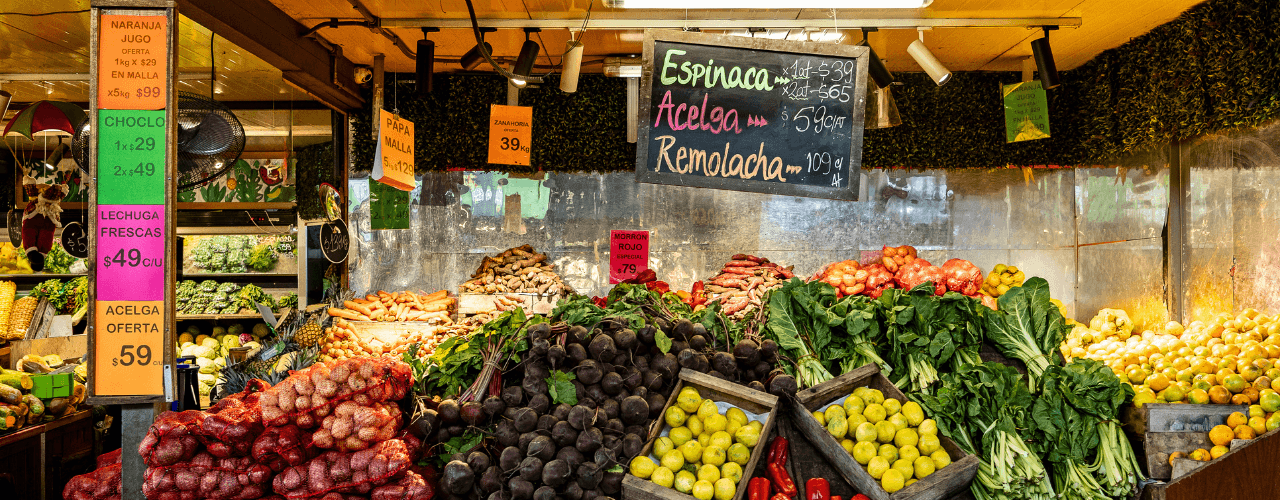

Pop-ups and market stalls expose a weakness in many multi-drop delivery apps that standard routing does not always account for. This is a common limitation when teams rely on a multi drop delivery app to manage locations that are not fixed. Teams can sequence routes correctly and still see failures because the delivery point itself is temporary or defined only by instructions. Reliability often depends on drivers arriving at the correct physical location at the right time.
How Multi-Stop Planning Fits Within a Multi Drop Delivery App
A multi-drop delivery app performs well at organising work and controlling route sequencing as volumes change. That capability remains fundamental for daily delivery operations.
The challenge at pop-ups and market stalls sits outside routing itself. Arrival conditions, access rules, and on-site handover points can change in ways that routing logic alone may not capture. This is where multi-stop planning often becomes necessary, sitting alongside routing to define how drivers should arrive, where handovers should take place, and what to do when site conditions differ from plan.
Where Does Delivery Reliability Break Down at Pop-Ups and Market Stalls?
Reliability often breaks down when teams collapse multiple delivery points into a single map reference, a situation that routing-focused delivery apps are not designed to resolve on their own in isolation. This is also where teams tend to lose control. Tools such as Delm8 help address this gap by allowing planners to define specific arrival points within shared or temporary sites, reducing ambiguity before drivers reach the location.
Access can also change during the day. Sites may allow vehicles in early and restrict access later. Delivery points can move as sites are reconfigured. Instructions that worked in the morning often stop applying by the afternoon.
In these situations, drivers lose time searching on arrival. Delays then compound across a multi-drop route.
Can a Multi Drop Delivery App Be Reliable Without Fixed Addresses?
A multi-drop delivery app can remain useful in non-fixed environments, but only to a point. In these scenarios, a multi drop delivery app still depends on the quality of the location information it receives. It can organise the route and sequence stops, but it cannot on its own resolve ambiguity at the delivery location itself.
As soon as drivers have to rely on interpretation or local knowledge, reliability can become inconsistent. At that point, outcomes depend heavily on who is behind the wheel and how well they handle the site.
When deliveries to pop-ups or market sites start producing inconsistent outcomes, that inconsistency is often a signal rather than a one-off issue. At that point, reviewing how arrival locations are defined and passed to drivers can be more effective than further route optimisation. Some teams address this by introducing tools such as Delm8’s address finder to help define clearer arrival points before routes are dispatched.
These issues tend to surface first as small inconsistencies instead of as outright failures. One driver completes the stop without issue, while another loses time at the same location on a different day. Over time, those small delays affect route completion, driver confidence, and delivery predictability. For teams running tight schedules or servicing multiple temporary sites in a single route, that variability becomes harder to absorb. At that point, the question is less about routing accuracy and more about whether arrival expectations are defined clearly enough before the route leaves the depot.
What Improves Reliability for Deliveries to Pop-Ups and Market Stalls?
Reliability often improves when teams remove uncertainty before they dispatch the route. That shift changes how much pressure drivers carry once they arrive on site.
This kind of clarity reduces the need for driver interpretation and helps avoid time being lost on arrival. In temporary environments, preparation tends to have a greater impact.
How Delm8 Supports Deliveries to Non-Fixed Locations
Delm8 supports deliveries to pop-ups and market stalls by focusing on arrival certainty instead of routing logic. It helps planners define clearer delivery points that reflect how a site actually operates, not just how it appears on a map.
For temporary locations, this approach ties delivery instructions to a specific physical spot instead of a broad address.
When a Multi Drop Delivery App Is Enough and When It Isn’t
In fixed environments, a multi-drop delivery app is often sufficient on its own, and a multi drop delivery app typically operates with fewer constraints on arrival certainty. Locations remain stable, access patterns repeat, and drivers build familiarity over time.
Pop-ups and market stalls operate differently. Locations shift, access changes, and familiarity is harder to rely on. In these cases, routing tools still matter, but reliability is strongly influenced by how well arrival uncertainty is managed.
Reliability at Pop-Ups Depends on Arrival Certainty, Not Routing Logic
Pop-ups and market stalls expose the limits of delivery apps that rely on fixed address assumptions. Teams can plan routes accurately and still fail at the final step.
In temporary environments, reliability often improves when arrival certainty becomes part of planning and drivers are less exposed to resolving it on site. If pop-up and market stall deliveries are creating delays or inconsistency, you can review how Delm8 fits into your current delivery setup. For teams assessing whether arrival certainty is the missing piece, booking a demo can help clarify whether Delm8 is a practical fit for your operation. You can book a demo here!